Amo Realty - Boston City Properties
North End Retail Space: Buying and Leasing Questions
Discuss commercial property with Amo
Help buying or leasing commercial propertyYour contact details
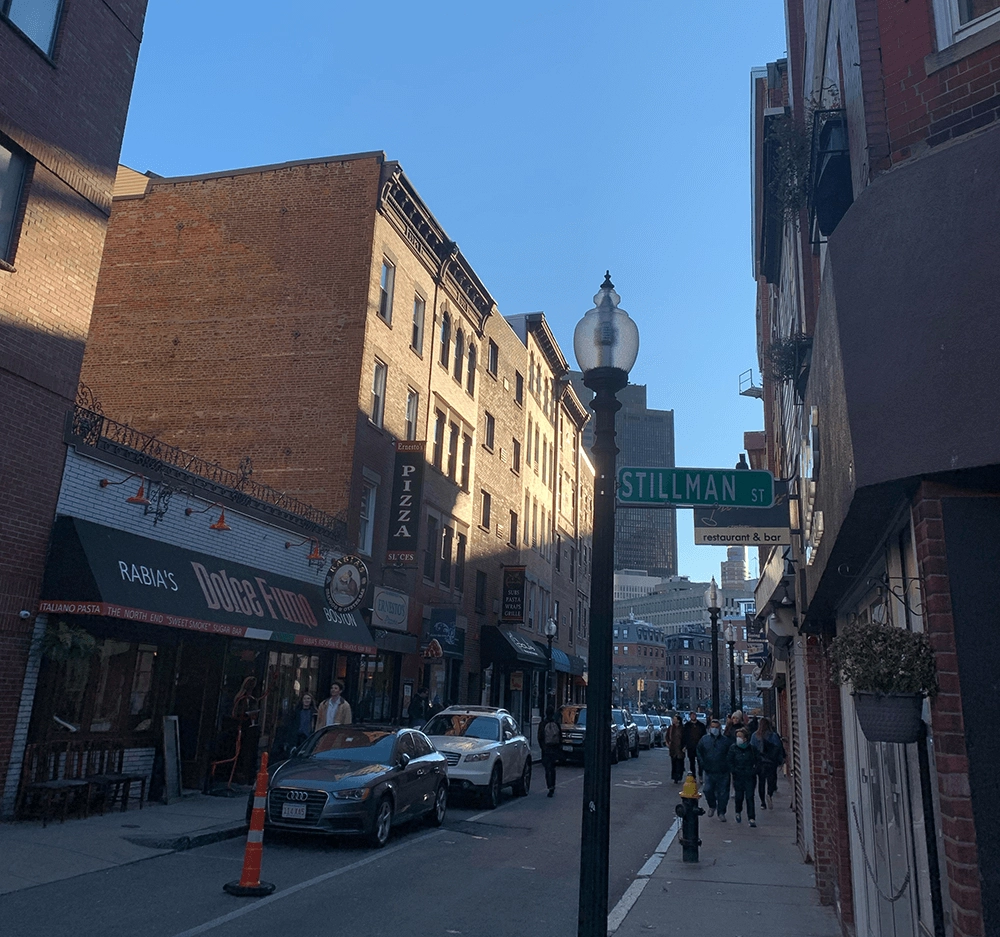
Storefronts in an older neighborhood
North End retail decisions often begin with the street and the building’s ground floor. A narrow storefront in a brick row building, a corner unit and a waterfront commercial suite can serve very different businesses.
Look beyond the total square footage to the entrance, display windows, usable sales area, basement access and the relationship to homes or offices above. Historic details may be attractive while also shaping a proposed build-out.
Earlier Commercial Street and North Washington examples
The earlier property discussion used 380 Commercial Street to illustrate ground-floor and basement space, and 123 North Washington Street to describe exposed brick, beams, high ceilings and a substantial stairway. They are architectural examples, not offered units.
At 98 North Washington Street, the account emphasized display windows across a long frontage. A business comparing similar space should ask how much of that frontage belongs to the actual unit and what signage is permitted.
Corner space and smaller storefronts
The source described 226 Causeway Street as a building with an older base and more modern upper portions, with a canopy and adaptable interiors. It contrasted that arrangement with smaller corner space at 57–59 Salem Street and the display treatment at 85–89 Salem Street.
For a smaller shop, storage, staff facilities and the position of the entrance can determine how much space remains for customers. A corner’s visibility is not a substitute for checking deliveries, access and the allowed use.
Commercial Wharf and waterfront context
The account described 33–68 Commercial Wharf through its nineteenth-century wharf setting and multiple commercial suites. Its waterfront discussion also included Sargents Wharf, Lewis Wharf, Atlantic Avenue, Commercial Street and Clark Street.
For a waterfront location, ask about flood-related considerations, structural condition, servicing and any public-access obligations affecting the property. Water views do not establish permission for a restaurant, event space or other particular business.
Compare the lease structure
A modified-gross, net or full-service lease can allocate expenses differently. Ask which charges are included in the quoted rent, which are additional and how maintenance responsibilities are divided.
A purchase raises separate questions about the premises, any condominium documents, shared building costs and the intended business use. Review the actual agreement with the appropriate professional advisers rather than treating a neighborhood average as the full occupancy cost.
Changes to the surrounding public realm
The earlier account discussed North Square improvements in 2017, the Paul Revere House’s neighboring education-center context and North Washington Street bridge plans. It also described waterfront development proposals and Harborwalk connections.
Those dated discussions help explain why street access and public space matter to a storefront. They are not a current construction notice, hotel offer or guarantee of an uninterrupted walking route.
Ask about a particular North End space
Tell Amo Realty / Boston City Properties whether you want to buy or lease, what the business does and which North End streets you are considering. Include the needed floor area, customer access, storage, delivery requirements and target timing.
If an earlier address interests you, name it as a location to investigate rather than assuming the unit remains available. A useful comparison should connect the actual space and agreement to the way the business will operate.